


Tilbake til Age of Transport

Navn på spill
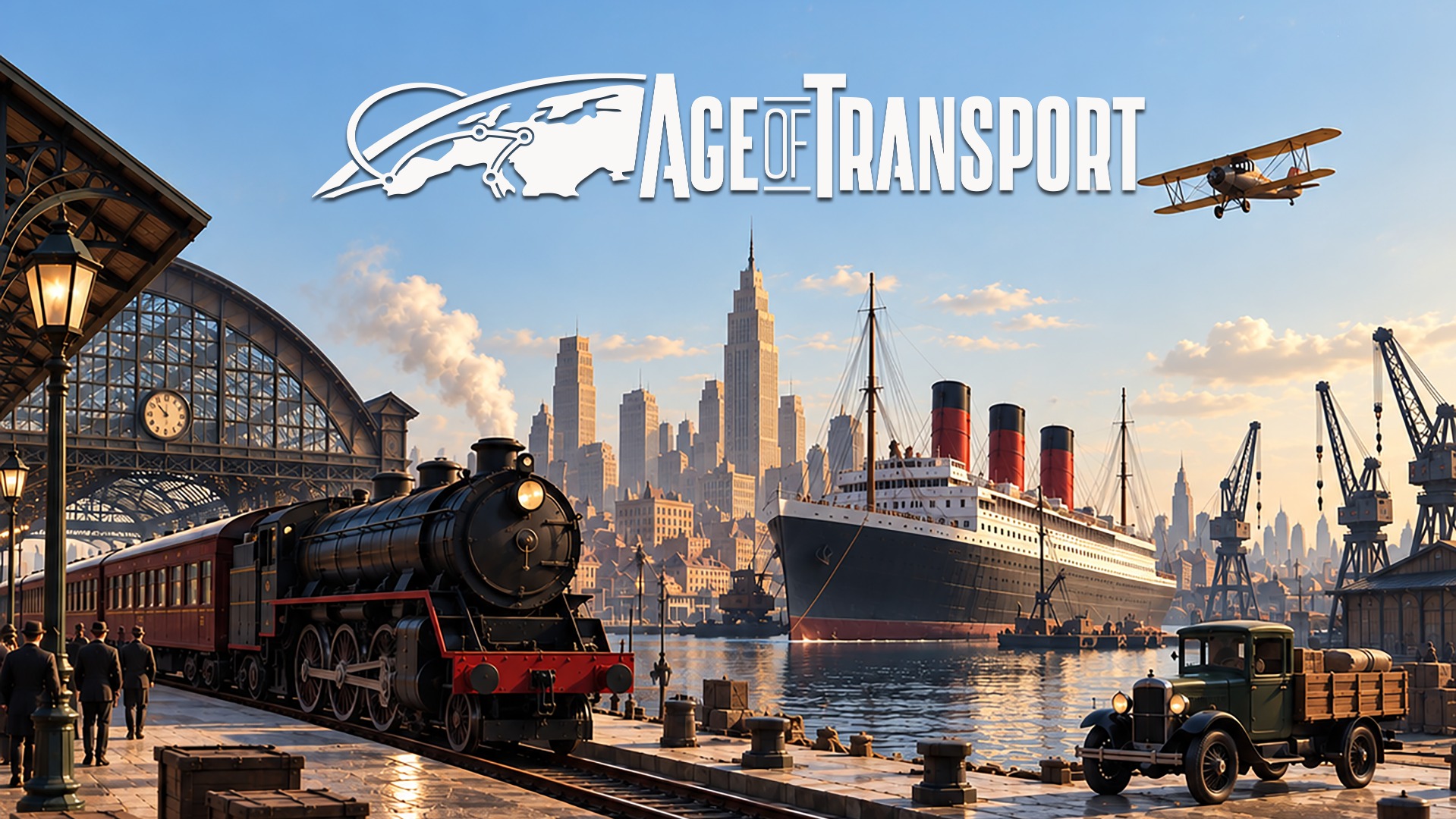
Hovedbilde Brukes flere plasser på SpillNorge, f.eks. i spillbasen.
Lanseringsdato? Du kan velge dag, måned eller år – eller ingen.
Er spillet lansert?
Er dette et studentspill / studentprosjekt eller et jam-spill?
Hvilket fylke ble spillet lagd i? (valgfritt)
Legg til skjermbilder og YouTube-videoer. Dra og slipp for å velge rekkefølge og slette.


Hovedbeskrivelse av spillet. Merk tekst for å formatere.
Norsk
English
0/4000
- The whole Earth, at 1:4 scale. 35 million km², more than 70,000 real cities, real mountain passes and rivers. All installed with the game — no streaming, no network required.
- There is no money. Cost is work. You don't buy a locomotive, you build it — from ore you hauled, in a shop that's busy until Thursday.
- Real railroading. Trains are dispatched, not assigned to routes. Yards hump and sort. Track is rail, sleepers, fastenings and ballast, and your line is only as good as the worst of the four.
- Charters give a planet a purpose. Undertakings, trials, surveys, routes and developments — you choose what kind of game you're playing this month, and the largest of them are the gates between eras.
- You build the industry as well. Mines, factories, production chains nine steps deep, and the power stations and grid that keep them running. The chains go deep — but this is not a game about units per minute, it is a game about whether Chicago gets fed.
- Your network feeds itself. Your railway hauls coal, and your railway burns coal. Steam wants water towers, electrics want catenary, ships want bunkers, aircraft want fuel on the apron.
- Cities are people, not points. They need food, then comfort, then medicine. You zone them and build their schools — and an educated city is the only place your high-tech factories can go.
- More than 2,500 rail vehicles, before the ships and the aircraft. The tech tree unlocks capabilities rather than catalogue entries: research the gas turbine and you get every turbine locomotive, not one.
- Every mode has real physical limits. Nothing but a ship crosses an ocean. Only a seaplane reaches a place with no runway. Until the late 1930s, no aircraft can fly over a mountain range at all.
- Nothing is ever waiting for your attention. A yard rebuild in Chicago, an ore corridor in Western Australia, a river service you have been meaning to fix since last week — all of it running at once, all of it yours to move between. You move between projects, not through time.
- Get down to track level whenever you like. Set the spotter panel to what you actually love — steam or diesel, yards, harbours, arrivals, panoramas — and the camera goes and finds it. A coal drag lifting a grade in the Rockies. A night departure under station lights. Your world becomes an aquarium.
- Twelve eras, the 1830s to today. You inherit every decision you ever made. The route that was a triumph in 1880 is the bottleneck of 1950.
- One world of your own, and only one. Persistent, cloud-synced, never wiped, no restarts — and playable entirely alone for as long as you want.
- Or share the planet with hundreds of people. Up to 255 companies in one running world, 500 or more concurrent players on a good dedicated server, and it all keeps running whether you are logged in or not. Persistent multiplayer at this scale is new to the genre.
- The other players are your customers. The airline needs concrete for its runways and fuel somebody else refined. The railways need aluminium that crossed an ocean. Past a certain point nobody is self-sufficient, and that is the design working.
- Open your world, and let it have an audience. Visitors spectate, found their own company on your map, or join yours as associates. Spectators lock to your camera and see exactly what you see, in real time — and the watchdog tells them the moment you log in, even from a world of their own.
0/4000
Legg til viktige lenker som butikker, hjemmesider og lignende!
Ikke stress – vi finner ut av hva som er hva!
Ikke stress – vi finner ut av hva som er hva!
Hvilke plattformer er spillet på?
PC ×
Hvilke sjangere er spillet?
Simulator ×
Strategy ×
Indie ×
Hvilke temaer inneholder spillet? (valgfritt)
Spisser sjangeren enda mer.
Spisser sjangeren enda mer.
Business ×
Sandbox ×
Open world ×


